Ram Mandir Ayodhya Pran Pratishtha
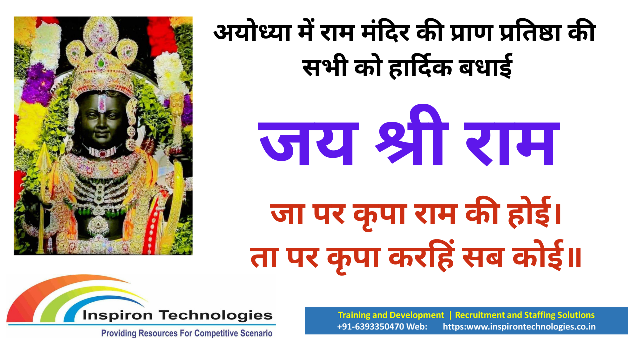
The Ram Mandir, also known as the Ram Janmabhoomi Mandir, is a Hindu temple that is under construction in Ayodhya, Uttar Pradesh, India. The temple is being built at the site believed to be the birthplace of Lord Rama, a revered deity in Hinduism. The construction of the temple has been a longstanding and contentious issue in Indian politics and society. Today on 22nd January, a hostoric day in India, the praan prathistha of Ram Mandir has been done successfully by our Honorable PM Narendra Modi. There have been galaxy of intellectuals, celebrities on this great occasion.
Here is an overview of the key events and background related to the Ram Mandir in Ayodhya:
Historical Background:
The Babri Masjid, a mosque built in the 16th century by Mughal Emperor Babur, stood at the disputed site in Ayodhya.
Hindus believed that the mosque was built on the birthplace of Lord Rama, one of the incarnations of the god Vishnu.
The dispute over the site led to tensions between Hindus and Muslims for several decades.
Babri Masjid Demolition (1992):
On December 6, 1992, the Babri Masjid was demolished by a large mob of Hindu activists. The incident sparked communal riots across India, leading to significant loss of life and property.
Legal Battles:
After the demolition, legal battles ensued over the ownership of the disputed site.
In 2010, the Allahabad High Court ruled that the disputed land should be divided into three parts among the Sunni Waqf Board, the Nirmohi Akhara, and the party representing the deity Ram Lalla (infant Rama).
The decision was appealed to the Supreme Court.
Supreme Court Verdict (2019):
In November 2019, the Supreme Court of India delivered a historic verdict.
The court ruled in favor of the construction of a Hindu temple at the disputed site.
It also directed the government to allocate an alternative plot of land to the Sunni Waqf Board for the construction of a mosque.
Formation of Trust and Construction:
Following the Supreme Court's verdict, the Shri Ram Janmabhoomi Teerth Kshetra Trust was formed to oversee the construction of the Ram Mandir.
The construction of the temple officially began in 2020.
Architectural Plan:
The proposed temple is designed in the Nagara style of temple architecture.
It is expected to be a grand structure with multiple mandaps, shikhara, and intricate carvings.
National and Cultural Significance:
The construction of the Ram Mandir is seen as a significant cultural and religious milestone for Hindus in India.
The temple is expected to become a major pilgrimage site.
The construction of the Ram Mandir has generated both support and criticism, reflecting the complex interplay of religious, cultural, and political factors in India. It remains a topic of discussion and debate in the country.
Praan Pratishtha, in the context of a Hindu temple, refers to the consecration ceremony during which the life force or divine energy is invoked into the idol or deity installed in the temple. It is a crucial and sacred ritual in the construction and establishment of a temple, marking the moment when the deity is believed to reside in the idol, making the temple a place of worship.
Regarding the Ram Mandir in Ayodhya, while specific details about the Praan Pratishtha ceremony may not be available due to the dynamic nature of events and the fact that my knowledge is up to January 2022, it is customary for such ceremonies to involve various Vedic rituals and prayers conducted by priests and religious scholars. The process typically includes the following elements:
Invocation of Deity: The ceremony begins with prayers and mantras seeking the presence of the deity, in this case, Lord Rama. The priests invoke the divine energy and invite the deity to reside in the idol.
Purification Rituals: Various purification rituals are performed to sanctify the temple premises, the idol, and the individuals involved in the ceremony. This often involves the use of holy water, sacred herbs, and the chanting of specific mantras.
Offerings and Sacrifices: Traditional offerings such as fruits, flowers, and symbolic sacrificial acts may be a part of the ceremony. These offerings are considered as a way of expressing devotion and gratitude to the deity.
Mantra Chanting: Vedic hymns and mantras are recited by the priests during the entire ceremony. These mantras are believed to have the power to connect with the divine and facilitate the presence of the deity.
Fire Ritual (Havan): The Havan, or the ritual of offering oblations into the sacred fire, is often an integral part of the Praan Pratishtha ceremony. The fire is considered a purifying element, and offerings are made to it as a symbol of surrender to the divine.
Final Blessings: The ceremony concludes with the priests seeking the blessings of the deity for the well-being of the devotees and the surrounding community. It is a moment of joy and celebration as the temple is officially consecrated.
The life of Lord Rama, as depicted in the Hindu epic Ramayana, is filled with moral and ethical lessons that are considered timeless and universal. Here are some key lessons that people often draw from the story of Lord Rama:
Duty and Dharma:
Lord Rama is often regarded as the epitome of righteousness (dharma). His commitment to duty and adherence to moral values, even in challenging situations, serve as a powerful example.
Loyalty and Relationships:
Rama's unwavering loyalty to his wife Sita and his commitment to family values are emphasized. His respect for relationships and his role as a loving husband and son are considered exemplary.
Humility and Humbleness:
Despite being a prince and later a king, Lord Rama remained humble and treated everyone with respect. His humility is seen in how he interacts with people from all walks of life.
Self-control and Patience:
Rama's ability to maintain self-control in the face of challenges and his patience in enduring difficult circumstances are important virtues. He faced trials with composure and without losing his sense of duty.
Justice and Fairness:
Lord Rama's commitment to justice is evident in his actions as a ruler. He is seen as a just and fair king who cared for the well-being of his subjects.
Courage and Bravery:
Rama's bravery in facing adversity, including his exile and the battles against demons, showcases the importance of courage in the face of challenges.
Forgiveness:
Rama's forgiveness towards those who wronged him, including his stepmother Kaikeyi and the demoness Shurpanakha, reflects the value of forgiveness and compassion.
Leadership:
As a king, Rama demonstrated qualities of effective leadership. His concern for the welfare of his people and his ability to lead by example are seen as qualities of a righteous ruler.
Equality:
Lord Rama treated everyone with equality and did not discriminate based on social status. His interactions with the sage Valmiki and the vanaras (monkeys) reflect his respect for all beings.
Devotion and Faith:
Rama's unwavering devotion to duty and his deep faith in dharma and divine principles serve as inspiration for those seeking spiritual values in life.
11. Sacrifice and Selflessness:
Lord Rama's willingness to sacrifice his own comforts for the well-being of others, such as accepting exile to honor his father's word, exemplifies the virtue of selflessness. This willingness to prioritize the greater good over personal desires is a powerful lesson in altruism.
12. Respect for Nature:
During his exile, Lord Rama lived in harmony with nature. His respect for the environment and the creatures within it, including his alliance with the vanaras (monkeys), underscores the importance of ecological balance and coexistence.
13. Adherence to Truth:
Lord Rama is often referred to as "Maryada Purushottam," the ideal man who follows the path of righteousness within prescribed limits. His commitment to truthfulness and upholding moral values is a recurring theme in the Ramayana.
14. Adaptability:
Rama's ability to adapt to changing circumstances, especially during his exile, showcases the importance of resilience and adaptability in facing life's challenges.
15. Understanding Duty in Different Roles:
Rama fulfilled various roles in his life, such as a son, brother, husband, and king. His ability to understand and execute his duties in each role serves as a model for individuals navigating multiple responsibilities.
16. Gratitude:
Lord Rama expressed gratitude for the support and assistance he received from others, such as Hanuman's devotion and Sugriva's alliance. This underscores the importance of recognizing and appreciating the contributions of others.
17. Detachment from Materialism:
Rama's detachment from material possessions is evident during his exile. This teaches the lesson of not being overly attached to worldly possessions and recognizing the impermanence of material wealth.
18. Guidance through Personal Conduct:
Rama's personal conduct and adherence to principles serve as a guide for righteous living. He didn't just preach; he exemplified the values he upheld, making his life a source of inspiration for others.
19. Unity in Diversity:
Rama's alliance with diverse groups, such as the vanaras and the bears, promotes the idea of unity in diversity. It emphasizes that people from different backgrounds can come together for a common purpose.
20. Spiritual Teachings:
Beyond his role as a king, Rama is also considered a spiritual guide. His teachings, especially those found in the Ramayana, provide profound insights into the nature of life, duty, and the pursuit of spiritual wisdom.
The lessons from Lord Rama's life are rich and multifaceted, offering guidance in various aspects of personal, social, and spiritual life. Individuals often find inspiration and moral guidance by reflecting on the virtues and values embodied by Lord Rama in the Ramayana.






Leave a comment